
GE Dishwasher Won’t Drain? Here’s What to Check First
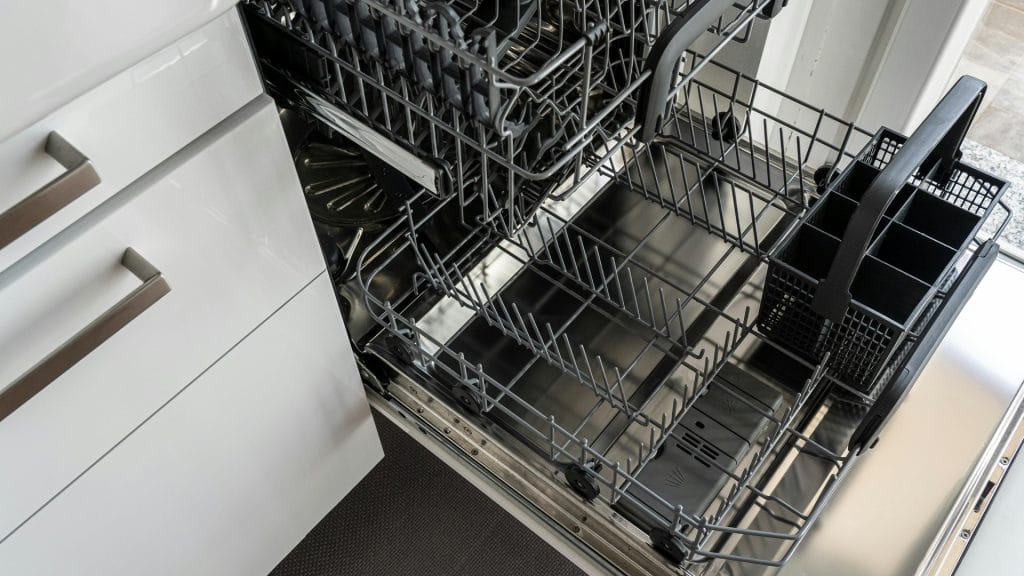
A dishwasher that won’t drain is one of the most common service calls in Ottawa homes — and GE models are no exception. Whether you’re dealing with a GE Profile, a GE Adora, or a higher-end GE Monogram dishwasher, standing water at the bottom of the tub after a cycle is a problem that usually has a clear, diagnosable cause. Before assuming the worst, there are several things worth checking yourself. And for anything beyond the basics, proper dishwasher repair by a licensed technician will get the unit draining reliably again without guesswork.
Why GE Dishwasher Repair Starts With Understanding the Drain System
GE dishwashers use a fairly consistent drain architecture across their residential lineup. A drain pump — typically a separate component from the wash pump on newer GE models — forces water out through a drain hose that connects either to a garbage disposal or directly to the sink drain under the counter. When something breaks down in that chain, water backs up and sits in the tub.
What makes GE-specific diagnosis useful is understanding where their models tend to fail. The GE Profile PDT series is well known for filter clogging issues, particularly in households that skip the regular cleaning cycle. Older GE Nautilus machines frequently develop worn drain pump impellers. And across newer GE and GE Monogram units with electronic control boards, drain failures sometimes show up as error codes — C1 or E1 codes on the display often indicate a drain or flood sensor issue rather than a purely mechanical failure.
Starting with the right area saves time and money. Here’s what to check before anything else.
Check the Filter and Sump Area First
On GE dishwashers manufactured after roughly 2010, a self-cleaning grinder was replaced with a manual filter system. Many Ottawa homeowners don’t realize their dishwasher has a filter that needs periodic cleaning — and a badly clogged filter is the single most common cause of poor or failed draining.
To check it:
- Remove the lower dish rack completely.
- Locate the cylindrical filter assembly in the back corner of the tub floor.
- Turn it counterclockwise and lift it out, then remove the flat mesh filter beneath it.
- Rinse both components under warm running water. Use a soft brush to clear debris from the mesh.
- Inspect the sump area underneath where the filter sat — food debris and broken glass often accumulate there and can jam the drain pump impeller.
If the filter was visibly blocked, clean it, reinstall it properly, and run a short cycle to test drainage. In many cases, this alone solves the problem.
Inspect the Drain Hose and Garbage Disposal Connection
If the filter is clean and water still won’t drain, the next logical step is the drain hose. On most GE dishwasher installations, the drain hose runs from the pump to either a garbage disposal inlet or a sink drain air gap. Two common issues appear here:
- A kinked or crushed hose: This often happens after someone has worked under the sink — the hose gets pushed into an awkward position. Pull out everything under the sink and trace the hose visually.
- A clogged garbage disposal knockout plug: If a garbage disposal was recently installed or replaced and the dishwasher suddenly stopped draining, there’s a good chance the plastic knockout plug inside the disposal’s dishwasher inlet was never removed. This is a surprisingly common oversight.
Also check that the drain hose has a proper high loop — it should arch up near the underside of the counter before dropping down to the disposal or drain. Without this loop, backflow from the sink can cause water to re-enter the dishwasher tub.
When It’s the Drain Pump: What GE Repair Actually Involves
If the filter is clean and the drain hose is clear, the drain pump itself is the likely culprit. Signs that point to a failed drain pump include a humming noise during the drain cycle with no water movement, or complete silence where you’d expect to hear draining.
On GE Profile and GE Adora models, the drain pump is located at the bottom of the unit and requires tilting or fully pulling the dishwasher out from the cabinet to access properly. The pump motor can fail electrically, or the impeller can become physically jammed by debris that passed through the filter — a small piece of glass or a hard seed is often enough to lock the impeller in place.
Replacing a GE dishwasher drain pump is a mid-level repair. It’s not a simple DIY fix for most homeowners because it involves disconnecting power, water supply, and the drain line, then partially disassembling the machine to reach the pump housing. For residents in Nepean and the surrounding west end of Ottawa, appliance repair in Nepean is available with same-day service in many cases — which matters when you’re left without a working dishwasher mid-week.
GE Monogram Dishwashers: When the Problem Is the Control Board
On GE Monogram built-in dishwashers — particularly the fully integrated ZDT series — drain failures sometimes originate with the electronic control board rather than a mechanical component. The board controls the timing and activation of both the wash and drain pumps. If it’s failing to send the drain signal at the correct point in the cycle, the pump may be perfectly functional but simply never activated.
This type of fault usually requires proper diagnostic equipment to confirm. A technician can check whether the board is outputting voltage to the drain pump during the drain sequence, which separates a board fault from a pump fault quickly and accurately.
Frequently Asked Questions
How often should I clean the filter on my GE dishwasher?
GE recommends cleaning the filter assembly once a month under normal use. If your household runs the dishwasher daily or frequently washes heavily soiled dishes, cleaning every two to three weeks is more appropriate. Neglecting the filter is the leading cause of drain and wash performance issues on GE’s manual-filter models.
Can a GE dishwasher drain issue damage other parts over time?
Yes. When a dishwasher repeatedly sits with standing water in the tub, the door gasket can deteriorate faster, and prolonged moisture exposure can begin to affect the control board and wiring harness. More immediately, running a wash cycle with blocked drainage puts additional strain on the pump motor, which can accelerate its failure. It’s worth addressing promptly rather than letting it run in a degraded state.
Is it worth repairing a GE dishwasher or better to replace it?
For most GE dishwashers under ten years old, repair is almost always the more economical choice — particularly for drain pump or filter-related failures, which are well-understood and use readily available parts. GE Monogram units, given their price point, are worth repairing at even greater age. The exception would be a unit with multiple simultaneous failures or a cracked tub, where replacement makes more financial sense.