
Installing an Over-the-Range Microwave: DIY or Hire a Pro? Costs in Ottawa
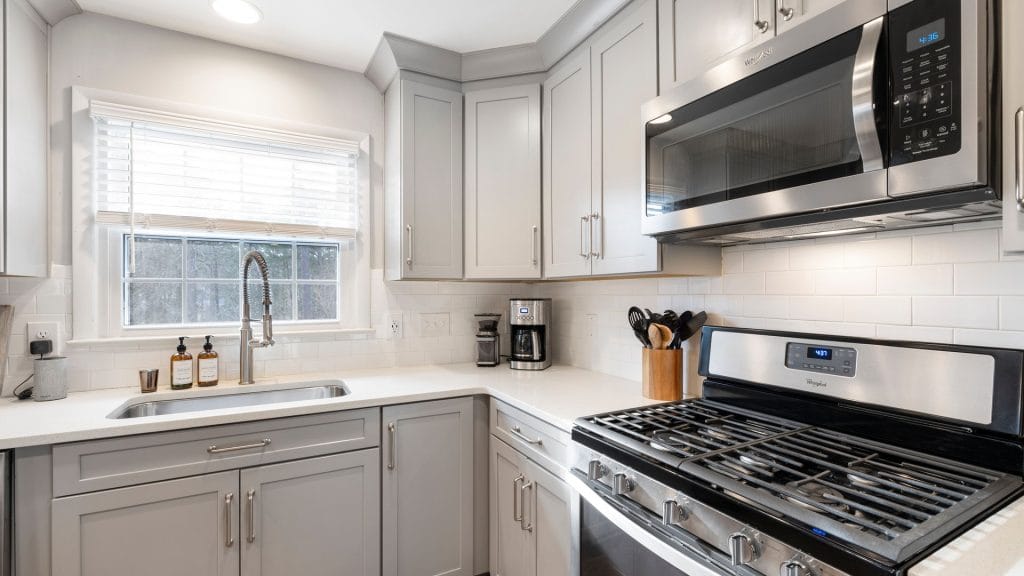
Over the range microwave installation looks like a one-afternoon job on the box, and sometimes it is. But the unit is heavy, it hangs from a wall and cabinet you cannot see into, and it sits directly above a cooktop that produces heat and grease. That is where mistakes get expensive. This post walks through what the job involves, the choices that matter, what you can do yourself, and what hiring it out typically costs in Ottawa.
What Over-the-Range Microwave Installation Involves
Whether you want to install a microwave over the stove for the first time or replace an old unit, the basic pieces are the same:
- A mounting plate. A metal bracket goes on the wall behind the microwave and carries most of the weight. It must be fastened into wall studs, not just drywall. The template in the box shows where the screws and cabinet holes go.
- Cabinet fastening. Bolts pass through the cabinet above and into the top of the microwave to hold it against the wall.
- Height and clearance. The manual gives the required distance above the cooktop and below the cabinet. Follow it exactly, since heat and steam rise from the burners.
- Power. Most units plug into a grounded outlet in or near the cabinet above. Many manuals call for a dedicated circuit.
- Venting. The choice between recirculating and ducted, covered below.
Weight is the part people underestimate. Many over-the-range microwaves weigh 50 pounds or more, and you have to hold one against the wall at chest height while lining up the bracket. This is a two-person job at minimum.
Replacing an old unit adds its own steps. Unplug the old microwave first, and have a helper support it while you remove the last bolts, because it drops the moment it comes free. Compare the new unit’s width, depth and mounting holes with the old one before you buy, since an old bracket rarely matches a different model. Expect to patch or fill any old screw holes that no longer line up.
Venting Choices for a Microwave Above the Stove
Every over-the-range microwave doubles as a range hood. There are two ways it can handle steam and smoke.
Recirculating models pull air through a filter and send it back into the kitchen. They need no ducting, so they are simpler to install and are common in condos and apartments. They do not remove moisture or cooking smells from the room as well as a ducted setup.
Exhaust-ducted models send the air outside through a duct, either through the wall or up through the cabinet and roof. This is more effective, but it means cutting through walls or cabinets and sealing the outside opening. In an Ottawa winter that sealing matters, because a poorly sealed vent lets cold air back in. The damper on the outside hood should close firmly when the fan is off.
If the old range hood was ducted, do not assume the new microwave will line up with the existing opening. The duct location, size and direction of the exhaust may differ from what the new unit needs, and that can add wall work. The same questions apply if you would rather install a stove hood and put the microwave elsewhere.
DIY or Hire a Pro?
A confident DIYer can do this job in the right conditions. Swapping like for like with a recirculating microwave, when the old mounting holes are known, the studs are where the template says, and an existing grounded outlet is in place, is realistic with a helper.
I would bring in a professional when any of these apply:
- There is no existing mounting plate and you are starting from bare wall.
- The wall behind is plaster, tile or hard to trace for studs, which is common in older Ottawa homes.
- You want ducted venting, or the vent has to change route.
- You need a new outlet or circuit. That is electrical work for a licensed electrician.
- The old hood was hardwired. Turn off the breaker, and have it disconnected and capped by a qualified person.
- The cabinet above needs cutting, or you are unsure it can carry the load.
- A gas range sits below. Clearances and heat matter even more here. Gas supply work is never a DIY job.
Safety basics if you do go ahead: switch off the breaker to any circuit you touch, use a stud finder and confirm studs before drilling, never use an extension cord, and do not remove the ground pin from the plug. If the outlet has only two slots, stop and have it assessed first.
If you would rather have it done for you, the appliance installation page describes what I do. If your current microwave is the issue, check whether a repair makes more sense first. The guide to repair versus replace covers that decision, and the microwave repair page shows what I can fix.
Over-the-Range Microwave Installation Cost in Ottawa
Labour for a simple like-for-like swap typically lands in the low hundreds of dollars. My labour rate is typically $90 to $150 per hour, so the total depends on how long the job takes and what it involves. The price goes up when there is ducting, wall or cabinet work, a new bracket to be set into studs, or an electrical outlet to be added. Some of that, such as a new outlet, means another trade and a separate cost.
These are typical figures, not a fixed price. The exact quote depends on your kitchen, the unit and the venting, so it helps to send photos of the wall, the cabinet above and the existing outlet. The cost of the microwave itself is separate. For a similar breakdown on another appliance, see the guide to dishwasher installation in Ottawa.
You can send details and photos through the contact page. Same-day appointments are often available, depending on the schedule.
Frequently Asked Questions
How high should an over-the-range microwave be mounted?
Follow the installation manual for your model. It gives the minimum distance above the cooktop and the way to position the mounting plate. Do not guess at the height, since heat and grease from the range affect how the microwave behaves over time.
Can I install an over-the-range microwave without studs?
Not safely. The bracket should be fastened into studs, because drywall anchors alone are not meant to carry that weight. If the studs do not line up with the template, that is a reason to bring in a professional.
Do I need a dedicated outlet for an over-the-range microwave?
Many manuals ask for a grounded outlet on its own circuit. Check the manual for your model. If the outlet is missing or the circuit is shared with other loads, that is a job for a licensed electrician.
Need Microwave Installation in Ottawa?
If you would rather have a professional take a look, call DirectFix Appliance Repair at (613) 725-5656 or learn about our appliance installation service. I explain the diagnosis before any work begins, and repairs are backed by a warranty.